An Ancient Technique for Modern Architecture
Shou Sugi Ban (also known as Yakisugi) is a traditional Japanese method of preserving timber by charring the surface with fire. Originating over 300 years ago, this technique was used to protect the external walls of homes, temples and commercial buildings across Japan. Today, it has been embraced by contemporary architects worldwide for its dramatic aesthetic impact and practical benefits.
At Timberulove, we supply pre-charred timber cladding in several species, ready for installation. Here’s everything you need to know about this remarkable material.
How Shou Sugi Ban Works
The traditional process involves three steps, known as Yaki-Sugi:
- Charring (Yaki): Three boards are wired together in a triangular chimney shape and a fire is lit at the base. The hot gases travel up the chimney, charring the inner faces evenly. The depth of char is controlled by the duration — typically 3-7 minutes.
- Cooling: The boards are separated and immediately doused with water to stop the charring process at the desired depth.
- Cleaning and finishing: The loose carbon is brushed away to reveal the textured surface beneath. A natural oil is applied to seal and enhance the finish.
Modern production methods use gas torches or industrial charring machines for consistency and scalability, but the principle remains the same.
Why Char Timber?
The charring process creates a carbonised layer on the timber surface that provides several practical benefits:
Enhanced Durability
The carbon layer is naturally resistant to insects, fungal decay and moisture penetration. Properly charred timber can last 80+ years in Japanese examples. In UK conditions, expect 30-50+ years of excellent performance.
Fire Resistance
Counterintuitively, charred timber is actually more fire-resistant than untreated timber. The carbon layer acts as an insulating barrier that slows the progression of fire — the same principle used in fire-door construction.
UV Resistance
The deep black colour of charred timber doesn’t fade or grey over time like natural timber. The carbon is inherently UV-stable, maintaining its appearance for years without treatment.
Zero Chemicals
Like ThermoWood, Shou Sugi Ban achieves enhanced durability through a physical process rather than chemical treatment. The only additive is a natural oil finish.
Charred Finish Styles
The depth and treatment of the char creates dramatically different aesthetics:
Deep Char (Alligator Skin)
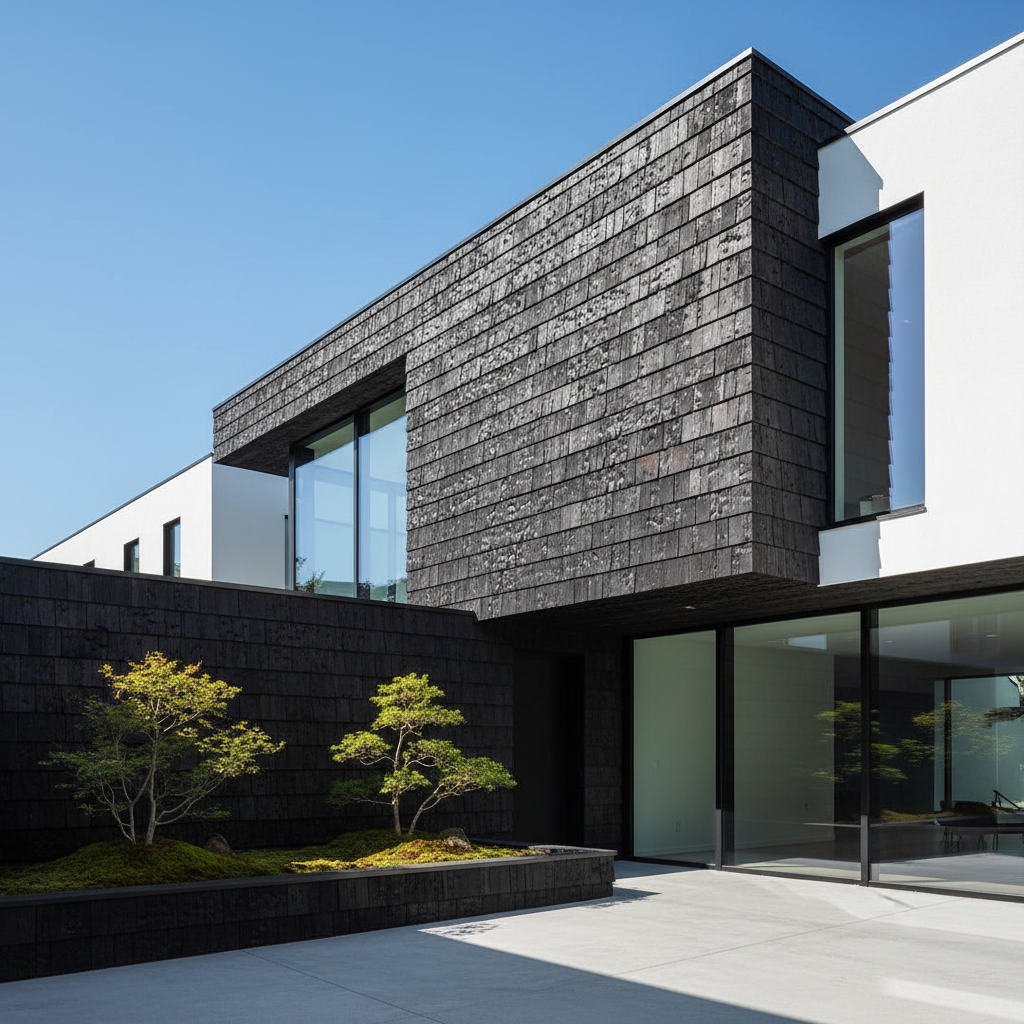
Heavy charring creates deep cracks in the carbon layer that resemble alligator or crocodile skin. This is the most dramatic and textural finish, casting deep shadows and creating a truly unique surface. The carbon layer is typically 3-5mm deep.
Medium Char (Brushed)
After charring, the surface is wire-brushed to remove loose carbon, revealing a beautiful contrast between the charred grain and the lighter wood beneath. This creates a strongly three-dimensional texture that catches light beautifully.
Light Char (Toasted)
A lighter application of heat browns the surface without creating a full carbon layer. The result is a warm, caramelised colour with subtle texture. This style works well where a less dramatic look is desired but the organic, hand-crafted quality of Shou Sugi Ban is still wanted.
Best Timber Species for Charring
Siberian Larch
Our most popular species for charred cladding. The tight grain structure of Siberian Larch chars beautifully, creating consistent results with excellent texture definition. The natural resin content also helps the charring process.
Cedar
The traditional choice in Japan (Sugi is Japanese Cedar). Western Red Cedar chars to a beautiful deep black with a fine, consistent texture. Its natural rot resistance combines with the char layer for exceptional longevity.
Ash
European Ash creates a dramatic contrast when brushed after charring — the hard grain ridges remain dark while the softer early wood is revealed in a lighter tone. This creates a striking striped effect unique to Ash.
Installation Considerations
- Handling: Charred timber will mark hands, clothing and adjacent surfaces with carbon dust during installation. Wear gloves and protect surrounding areas. Once installed and oiled, carbon transfer stops.
- Cutting: Use a fine-toothed blade to minimise splintering of the charred surface. Seal cut edges with oil after cutting.
- Fixings: A4 stainless steel fixings only — visible fixings on black timber create a striking industrial contrast, or use secret fixing systems for a cleaner look.
- Ventilated cavity: As with all timber cladding, fix to battens over a breathable membrane to create an air gap behind the boards.
Maintenance
Charred timber is remarkably low-maintenance:
- Oiled finish: Reapply a natural exterior oil (we recommend OSMO) every 3-5 years. The oil darkens the finish and provides additional water repellency.
- Unoiled: Left without oil, charred timber maintains its dark appearance far longer than any natural timber finish. Some carbon may be lost over decades in very exposed locations.
- Cleaning: Gentle brush or low-pressure rinse only. Never pressure-wash charred timber as this will remove the carbon layer.
Design Inspiration
Charred timber cladding makes a powerful architectural statement. It works particularly well:
- Combined with raw concrete or Corten steel for an industrial aesthetic
- Contrasted with white render or pale stone for dramatic visual impact
- As a feature wall on garden rooms, studios and ancillary buildings
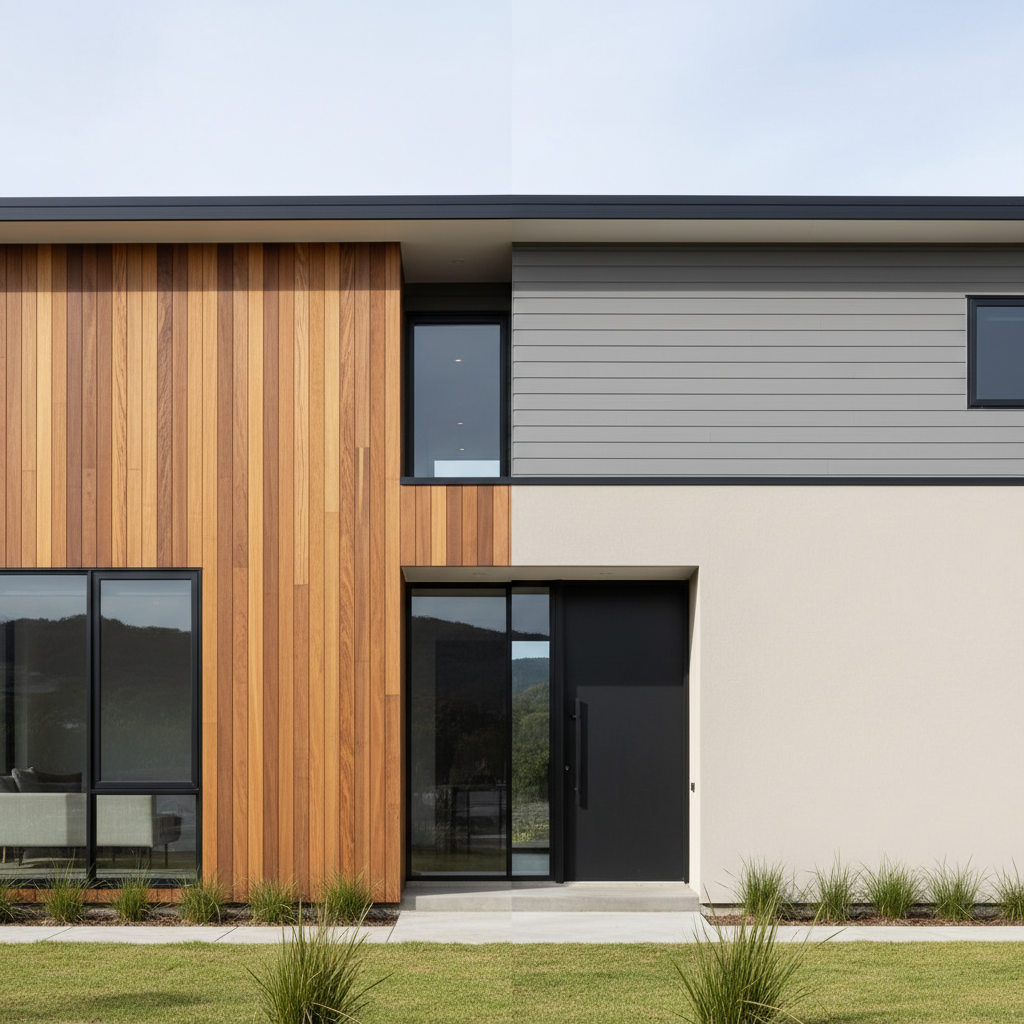
- Mixed with natural (uncharred) timber cladding on different elevations
- On contemporary new builds where a bold, distinctive exterior is desired
Order Charred Timber from Timberulove
We supply pre-charred cladding boards in Siberian Larch, Cedar and Ash — ready to install straight from the box. No mess, no fire risk, consistent professional results. Browse our charred cladding range or contact us for samples and pricing.